


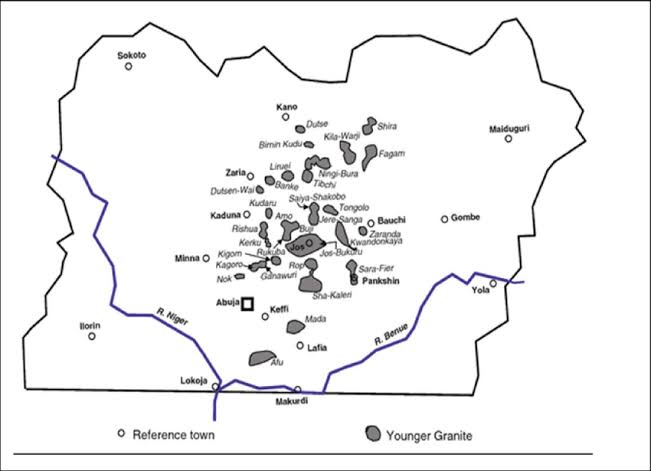
Nigeria has landed a major milestone in the global geoscience space following the selection of the Jurassic Younger Granites of Jos as one of the 100 International Union of Geological Sciences (IUGS) Geological Heritage Sites of the World.
Chairman of the United Nations Educational, Scientific and Cultural Organization (UNESCO) International Geoscience and Geoparks Programme (IGGP) Nigeria National Committee, Dr Aminu Abdullahi Isyaku, described the recognition as a historic achievement that marks the beginning of a new era for geotourism and geoheritage development in the country.
Speaking on the development, Dr Isyaku said the recognition places Nigeria prominently on the global geoheritage map and creates opportunities for sustainable tourism, education, investment, scientific research, community development and future UNESCO Global Geopark designation.
“Nigeria’s first IUGS Heritage Site recognition marks the beginning of a new era for geotourism and geoheritage development. This achievement is not merely a scientific honour; it is international recognition of Nigeria’s geological heritage and an opportunity to harness our unique geological landscapes for sustainable development,” he said.
The ROCKPOST reports that the recognition marks the first time a Nigerian geological site has been included among the world’s most significant geological heritage locations by the IUGS.
The designation acknowledges the international scientific importance of the Jos Younger Granite Province, widely regarded as one of the world’s most remarkable geological provinces due to its distinctive Jurassic ring complexes, mineral resources and contributions to scientific understanding of Earth’s evolution.
According to Isyaku, the development represents a significant step towards the protection, promotion and sustainable utilisation of Nigeria’s geological heritage resources.
He commended the contributions of Professor Nathaniel G. Goki, a member of the UNESCO IGGP Nigeria National Committee and Secretary of the Nigeria Geoheritage Association, who led the nomination process, as well as Professor Olugbenga Okunlola, President of the Geological Society of Africa, and other geoscientists and stakeholders whose efforts culminated in the international recognition.
Isyaku noted that the benefits of the designation extend beyond scientific acclaim, stressing that globally recognised geoheritage sites have become drivers of economic growth, tourism development, environmental education, research and community empowerment in many countries.
He said the recognition provides Plateau State and Nigeria with a unique opportunity to develop a globally competitive geotourism destination while preserving a significant component of the country’s natural heritage.
The UNESCO IGGP Nigeria National Committee stated that the recognition would strengthen efforts towards future UNESCO Global Geopark development initiatives.
According to the committee, the international acknowledgement of the geological significance of the Jurassic Younger Granites of Jos provides a strong foundation for future geopark aspirations and enhances Nigeria’s standing within the global geoheritage and geotourism movement.
The committee also announced that the formal unveiling of the 3rd Edition of the 100 IUGS Geological Heritage Sites of the World will take place at the Algarvensis Geopark in Portugal in November 2026, where the Jurassic Younger Granites of Jos will be officially presented alongside other geological sites of global significance.
Isyaku described the forthcoming unveiling as an opportunity to showcase Nigeria’s geological assets on the world stage, deepen international partnerships and promote the country’s emerging geoheritage and geopark initiatives.
He called on government institutions, development partners, academia, professional bodies and the private sector to support efforts aimed at leveraging the recognition for sustainable development, tourism promotion, heritage conservation and economic diversification.
“The world has recognised the international significance of one of Nigeria’s most remarkable geological landscapes. Our responsibility now is to transform this recognition into tangible benefits for our people through geotourism, education, conservation, research and sustainable development,” he said.
The UNESCO IGGP Nigeria National Committee, domiciled at the Nigerian Geological Survey Agency (NGSA), serves as Nigeria’s national platform for promoting international geoscience cooperation, geoheritage conservation, sustainable earth resource management and UNESCO Global Geopark development.

