


By: Abdulsalam Omuya Lukeman
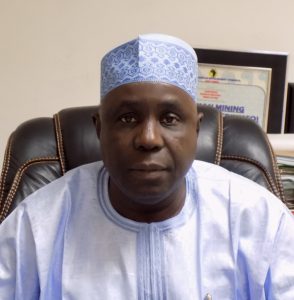
Engr. Mohammed K. Amate, the Pioneer Director‑General of the Nigerian Mining Cadastre Office (MCO), passed away recently. Like a seismic event high on the Richter scale, it remains surreal and difficult to comprehend. His passing marks the end of a defining chapter in Nigeria’s mining history. Under his leadership, the MCO emerged from its formative years to become a model of transparency, efficiency, and institutional integrity. Today, Nigeria’s mining sector owes much of its renewed investor confidence and regulatory credibility to his pioneering reforms.
A Visionary Beginning
When the Nigerian Minerals and Mining Act of 2007 established the MCO, it inherited a faltering licensing culture characterized by opacity, bureaucratic delays, and discretionary power. In February 2011, President Goodluck Jonathan appointed Amate as the inaugural Director‑General, tasking him with redefining the agency’s role and mandate.
A mining engineer by training and a dedicated public servant, Amate was already recognized for his technical acumen and reformist spirit. As Director of Mines in the Federal Ministry of Solid Minerals, he had witnessed and documented systemic weaknesses – from opaque title conferral to informal practices undermining miner confidence.
Appointed to lead the newly autonomous MCO, he set himself two bold objectives: to establish a licensing system governed by rules, not influence, and to set timelines that supported investor planning rather than frustrating it. He took to modernization not just as a strategy but as a principle.
Transformative Impact
When Amate assumed office, licensing could take up to two years, often leading to inexplicable delays and stifled investments. Between 2005 and 2013, only a small fraction of mining applications was processed satisfactorily; many were lost in backlogs.
Under Amate’s guidance, the MCO implemented new workflows and systems. In 2011, the office inaugurated plans alongside the World Bank and German firm GAF AG to computerise its cadastre system using SIGTIM. A web front-end ensured real-time tracking of applications – no longer were miners forced to plead with officials; the rule was clear: “Follow the process, get the title.”
By 2018, Amate oversaw the signing of another key partnership with GAF and the World Bank, taking Nigeria from geo-polygon tools to a fully integrated e-cadastre. He ensured the system worked seamlessly with six zonal offices nationwide, breaking Abuja’s monopoly on access.
Licensing time reduced dramatically – from 12–24 months down to 30–45 days. Under his watch, over 7,000 mining titles were issued, with about 4,500 remaining active after appropriate review. This was transformative: Nigeria’s investment climate in solid minerals turned from opaque to predictable.
Amate also led anti-hoarding reforms. Titles that remained undeveloped could be revoked— “use it or lose it” became the norm. He instituted proper license renewal and search fees, significantly increasing revenue and accountability.
Institutional Legacy
Amate’s tenure established a strong foundation:
- Transparent, rule-based licensing system: zero tolerance for favoritism; a click-driven process anyone could follow.
- Digitization: introduction of SIGTIM and integration with global best practices.
- Investor confidence: visible timelines and tech-driven efficiency attracted both domestic players and foreign investors.
- Revenue generation: titles, renewals, and search fees became predictable, boosting government revenue.
- Institutional consolidation: empowered zonal offices, strengthened MCO’s autonomy, and reduced discretion.
Leadership Profile
Colleagues describe Amate as calm, principled, and visionary. He refused shortcuts and demanded accountability from day one. Weekly reviews, desktop checks, and strict processing deadlines were part of his leadership style. At meetings of the Nigerian Mining and Geosciences Society (NMGS), he became an outspoken champion for good governance in mining.
Amate also valued mentorship. He built teams within the MCO and encouraged young engineers to specialize in cadastre and regulatory roles. Many current MCO staff credit their professional grounding to his foresight and disciplined approach.
National Recognition
His work earned commendations:
- The Nigerian Society of Mining Engineers recognized his role in data-driven, accountable licensing.
- The World Bank and GAF AG noted Nigeria’s cadastre transition as an African best practice.
- Senior Ministry officials publicly credited him with making the mining office worthy of state and federal investments.
Broader Impact
The broader benefits of his reforms include:
- Job creation: faster licenses enabled quicker project start-ups, creating local employment.
- Revenue diversification: solid minerals began contributing real value to the national economy.
- Regulatory model: Nigeria’s MCO became a blueprint for mining licensing reforms in other African states.
Final Years, Succession
Having served as DG for eight years, Amate handed over the mantle in 2019 to Engr. Obadiah Simon‑Nkom. Amate’s departure didn’t mark retirement from the sector – he continued advising policy teams and supporting cadastre tech updates as the MCO implemented eMC+ in 2022 under Simon‑Nkom.
Long after his formal tenure ended, his fingerprints remained on every part of the agency – from licensing reforms to cyber-security protocols and zonal outreach.
Remembering Amate
Amate is remembered for:
- Professional integrity and ethical clarity.
- Compassionate mentorship of junior staff and colleagues.
- Calmness under pressure – he famously managed political difficulties with quiet, reasoned resolve.
- His affinity for field visits – he insisted on personally visiting new license zones to foster trust and accountability.
- Quiet diplomacy – he enlisted religious and local leaders to ensure mining did not inflame communal tensions.
A Nation’s Loss
Engr. Amate’s passing robs us of a rare leader: a discipline-driven technocrat who married good governance with national purpose.
His reforms were not cosmetic; they rewrote systems through technology, transparency, and talent.
His legacy lives on through the electronic cadastre systems, the thousands of revenue-generating titles issued, and the improved sector standards he championed.
Tributes
- “He transformed licensing in Nigeria. We now have timelines, not endless bureaucratic wait times,” said Nkom, his successor.
- “He built a team, not just an agency,” commented a senior staff member, recalling long training days and late-night data reviews.
- “His quiet determination was his greatest virtue,” shared a former World Bank representative active during cadastre reforms.
The Path Ahead
Nigeria must deepen Amate’s reforms – not just with eMC+, but through continuous investments in zonal capacity, cyber-security, and data‑driven policy.
His work, designed for longevity, demands successors who uphold his ethics and resist regression.
His core achievements – efficient licensing, transparent governance, and sectoral growth – remain the roadmap for Nigeria’s mining trajectory. The trust he restored is fragile; it must be nurtured through ongoing oversight, technology adoption, and youth development in mining engineering and cadastre practice.
Final Words
Amate was not just a pioneer – he was a builder.
Through foundations laid in strategy and discipline, he created pathways for hundreds of mining firms, thousands of employees, and millions in revenue. These foundations now support the broader national vision of solid minerals contributing meaningfully to Nigeria’s economy.
His life reminds us that institutional reform often begins with individuals — firm in principle, consistent in action, and unwavering in purpose. With deep sorrow at his passing and gratitude for his stewardship, we honour his memory and carry forward his vision.
May generations of Nigerian mining professionals stand on the foundation he built. May his spirit continue to guide cadastre practitioners toward transparent, accountable public service.
May his soul find eternal rest. Amin!
Abdulsalam Omuya Lukeman, editor-in-chief, The Rock Post magazine, writes from Abuja, Nigeria.
omuyalooks@yahoo.com
09088881999

